Pixel Gun 2: 5 Exciting Features, Gameplay, PvP & Android Guide
Sep 15, 2026Size
499 MBVersion
0101.0Requirements
12 and upDownloads
100,000+ Get it on

Description
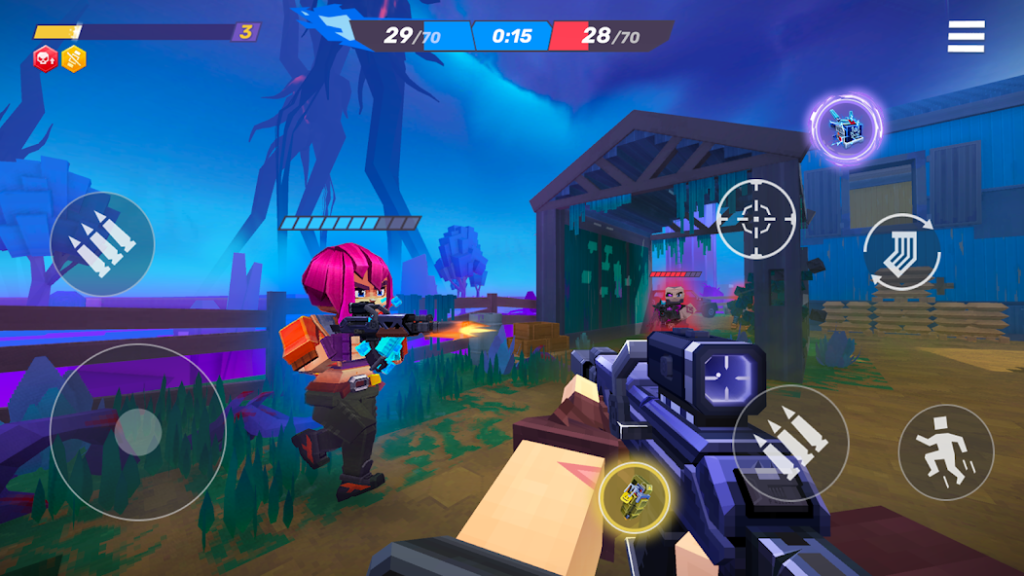
Pixel Gun 2 is a first-person shooter for Android that pairs fast-paced PvP with destructible arenas and a customizable character build system. It arrived on Google Play on September 2, 2026, and its listing already shows more than 100,000 downloads. This guide goes through how its combat is structured, what its build system includes, which multiplayer modes are named, how cross-platform progression is described, and what the store listing says about requirements and purchases.
Pixel Gun 2 Version and App Information
The following values are taken directly from the Google Play listing:
| Detail | Information |
|---|---|
| Version | 0101.0 |
| Updated on | Sep 15, 2026 |
| Released on | Sep 2, 2026 |
| Requires Android | 12 and up |
| Downloads | 100,000+ |
| Content rating | Rated for 3+ |
| Get it On | Play Store |
| Interactive elements | In-Game Purchases (Includes Random Items) |
| Offered by | Pixel Gun 3D |
Quick Navigation
About Pixel Gun 2
Pixel Gun 2 sits in the action category as a multiplayer FPS game built for mobile, with PC support described alongside it. On Google Play the app is listed as offered by Pixel Gun 3D, and the current version is 0101.0, updated on September 15, 2026.
Five features carry most of the game’s identity, and they shape the structure of this article:
- Destructible environments that change the battlefield
- Character builds made from weapons, gadgets, armor, and perks
- PvP battles alongside online co-op
- Cross-platform multiplayer with shared account progression
- Content delivered over time through the Pixelstorm
The sections below take each in turn, then move to the practical details: Android requirements, version information, purchases, and common questions.
Pixel Gun 2 Gameplay
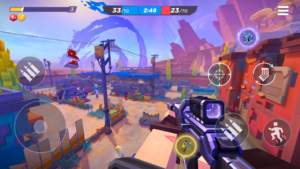
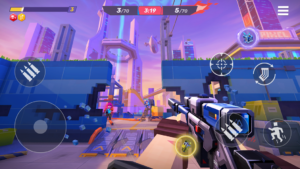
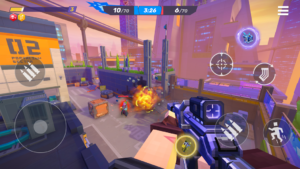
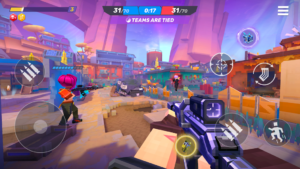
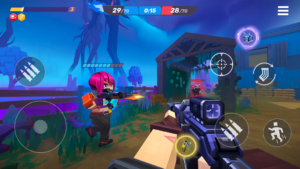
The moment-to-moment loop is that of a first-person shooter. You move through an arena, find opponents, and win fights through aim, timing, and positioning. What complicates that loop is the environment itself. Since the arenas are destructible, the space you fight in is not a fixed backdrop, and tactical gameplay extends beyond who shoots first.
That has a practical consequence for how a match is read. In many shooters, learning a map means memorizing lanes, corners, and strong positions. Here, the map is described as something that changes, so the useful skill shifts toward reading what a fight has done to the space around you. A position that felt safe at the start of a round may not be safe later, and the reverse can be true as well.
Abilities and gadgets add a second layer to the loop. Alongside your weapons, the build system includes tools and combat abilities, which means a fight can be decided by a well-timed ability as much as by a clean shot. Together, these elements make Pixel Gun 2 gameplay a mix of shooting skill, map awareness, and build choices.
Every Match Plays Differently
Variety is one of the main claims of the game’s design, and destruction is the mechanism behind it. When the environment changes during play, two matches on the same map can diverge quickly. One round might see a structure break early and open up a new route. Another might leave the same structure standing while the fighting happens somewhere else entirely.
For a competitive shooter, that unpredictability matters in a specific way. It works against repetition. Players who rely on a single memorized route or a favored corner face a map that can stop cooperating, and players who pay attention to how the arena is shifting have more to work with. The result is a format that leans on adaptation rather than rote learning.
It also affects how you might approach the build you bring in. If any given match can develop differently, a flexible setup may suit the format better than one designed around a single situation. That is a point about how the system fits together rather than a guaranteed strategy, but it helps explain why customization and destructible maps are described as parts of the same design.
Destroy and Reshape the Battlefield
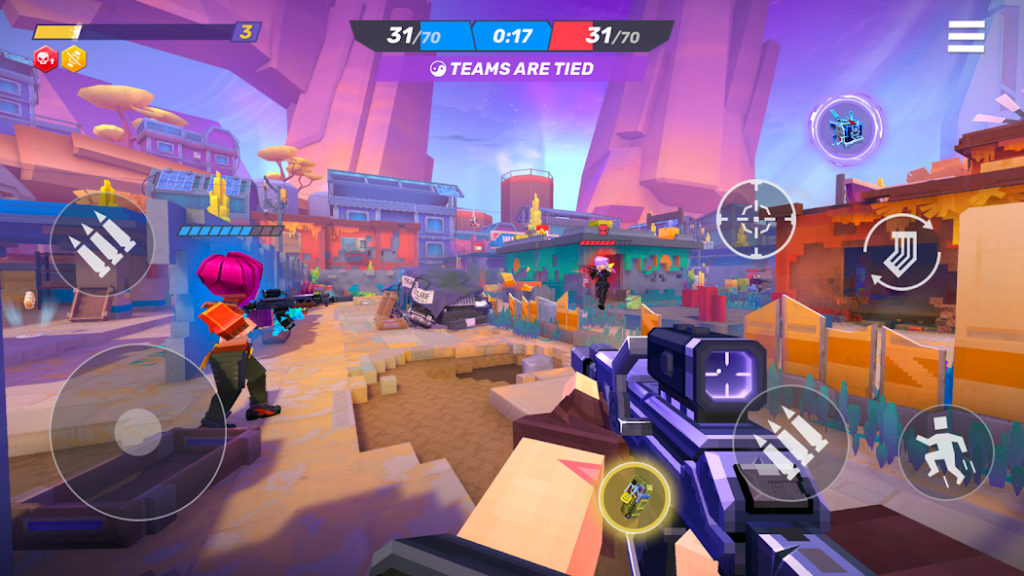
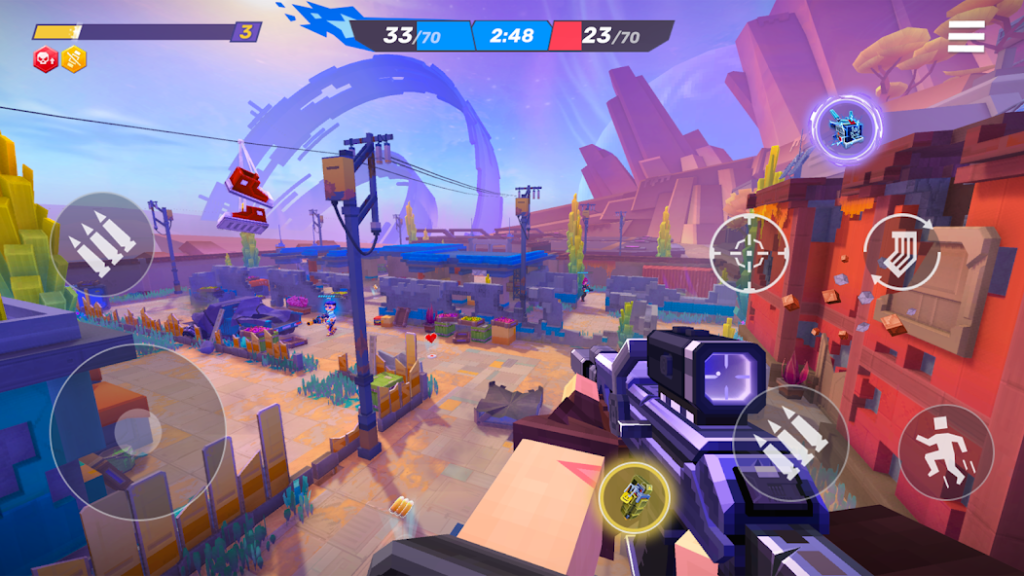
Destructible arenas are the feature that most clearly distinguishes Pixel Gun 2 from a standard mobile shooter. The listing’s emphasis on changing battlefields means walls, cover, and structures are part of what fights can affect.
The tactical implications are straightforward to think through. Cover that can be broken is cover that cannot be relied on indefinitely. A defender holding a position can be pushed out when the structure around them gives way, and an attacker can create a route where none existed. Destruction becomes a tool for pressure, not just a visual effect.
It also changes the value of information. Knowing where opponents are matters, but so does knowing what state the arena is in. Players who notice that a sightline has opened, or that a protective wall has gone, can adjust their approach mid-fight. That kind of awareness is a separate layer from aiming ability, and it is one of the reasons destructible environments are a recurring reference point when this game is discussed.
For readers who search for destructible environment games on Android, Pixel Gun 2 is one title built directly around that idea, with the arena itself acting as a variable in every match.
Create Your Character and Build
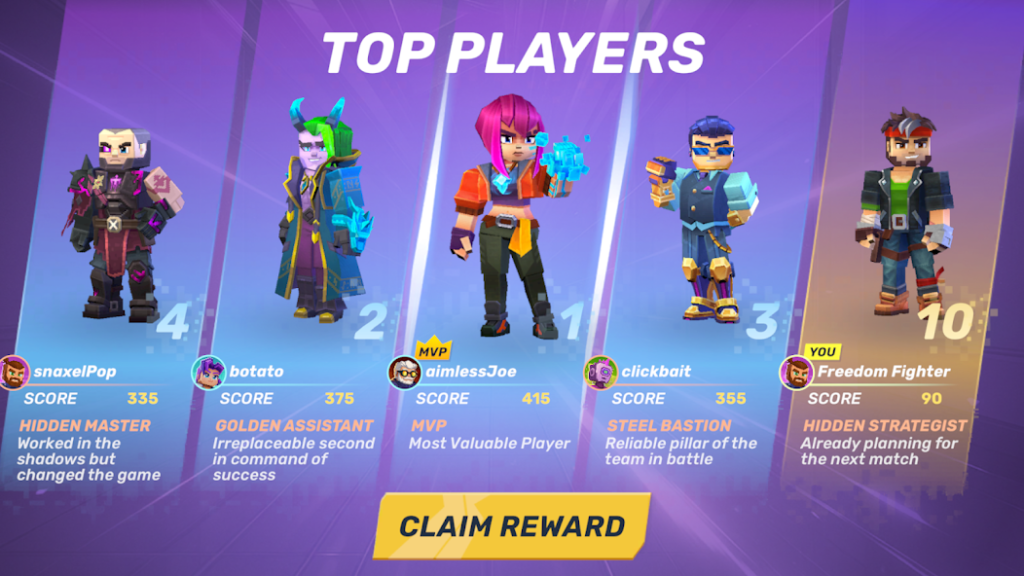
Character builds are the second pillar of the game. Rather than presenting a single fixed loadout, Pixel Gun 2 gives you a set of categories to assemble into your own setup: weapons, gadgets, armor, passive perks, and combat abilities. Each addresses a different question. Weapons answer how you deal damage, gadgets answer what tools you carry beyond your main gun, armor relates to how you withstand incoming fire, and perks and abilities shape the extra effects that round out a playstyle.
The point of a build system is that it lets different players approach the same arena differently. Someone may center a build on one type of engagement while another player assembles a very different combination. Since matches are also shaped by destructible maps, those choices interact with the environment rather than existing in isolation.
Build customization is also where the game ties into progression. Shared account progression is described as part of the experience, which suggests that the builds and unlocks you work toward belong to your account rather than to a single device. The listing does not go into more detail on how progression is structured, so this article keeps to what is documented.
Customize Weapons, Gadgets, Armor, and Perks
Breaking the build system into its parts makes it easier to see how the categories relate.
Weapons and weapon loadouts. Weapons are the foundation of any shooter, and weapon customization is one of the named parts of the build system. Your loadout defines your primary way of fighting, and it sets the tone for the rest of the build.
Gadgets. These are tools that sit outside your main weapons. Their role is to give a build options that raw firepower does not cover.
Armor. Armor belongs to the defensive side of the build and affects how a character holds up during fights.
Passive perks. Perks are described as passive, meaning they add lasting effects to a build rather than requiring activation in the middle of a fight. They tend to define a build’s character in the background.
Combat abilities. In contrast to passive perks, combat abilities are the active options, the moments where a player chooses to trigger something.
Taken together, the categories describe a build as a set of decisions rather than a single choice. Because all five parts are listed as customizable, players can experiment with combinations, and the game’s Singleplayer Mode against AI opponents gives them a place to do that outside PvP.
Pixel Gun 2 PvP and Multiplayer Modes
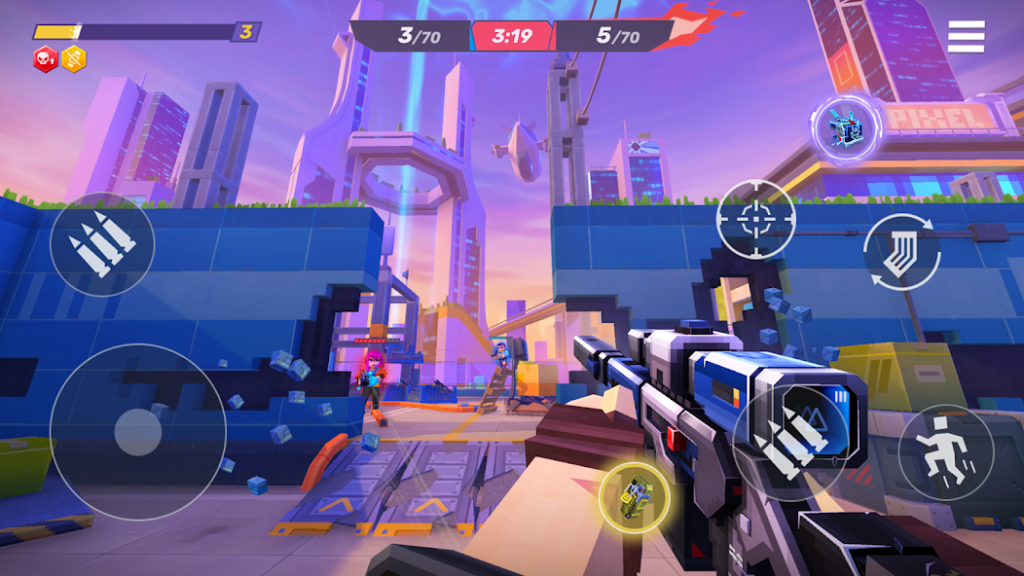
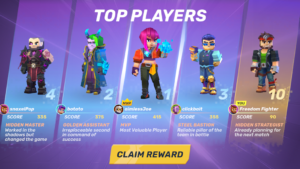
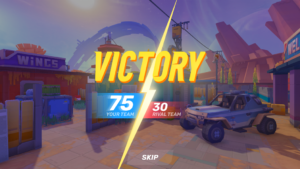
Pixel Gun 2 PvP is the main competitive format. Multiplayer matches put players against each other in fast PvP battles, where the combination of aim, build, and reading the changing map decides the result. Online co-op is also part of the multiplayer offering, so the game is not limited to pure competition.
The shooter’s structure places emphasis on speed. Matches are described as fast-paced, which fits a format where destructible maps keep fights from settling into static standoffs. Pressure on a position can come from the environment breaking as much as from an opposing player pushing forward.
For players who prefer to warm up, the game includes a Singleplayer Mode with AI opponents. The listing does not describe how the AI behaves, so it is best understood simply as a way to play without other people. That makes it a natural place to try weapons, gadgets, and perks before taking a build into a multiplayer match.
Cross-Platform Multiplayer and Shared Progression
Pixel Gun 2 is described as supporting cross-platform multiplayer between PC and mobile, together with shared account progression. In plain terms, that means players on different devices can take part in the same multiplayer experience, and progress is tied to the account rather than to one device.
For anyone comparing shooters, this is a meaningful design choice. A mobile game that also runs on PC can serve players who move between a phone and a computer, and shared progression prevents that switch from meaning a restart. Search terms such as Pixel Gun 2 PC and Pixel Gun 2 crossplay reflect exactly this interest.
One caveat applies. This article relies on the supplied information for the cross-platform description, and the Google Play listing itself is centered on the Android version. Readers who need to confirm platform availability, or how crossplay is set up, should check the developer’s official channels for the current status.
Readers interested in another online Android title covered on GameVault can look at our Norse Saga gameplay guide, which covers an Android MMORPG.
Pixel Gun 2 Maps and Game Modes
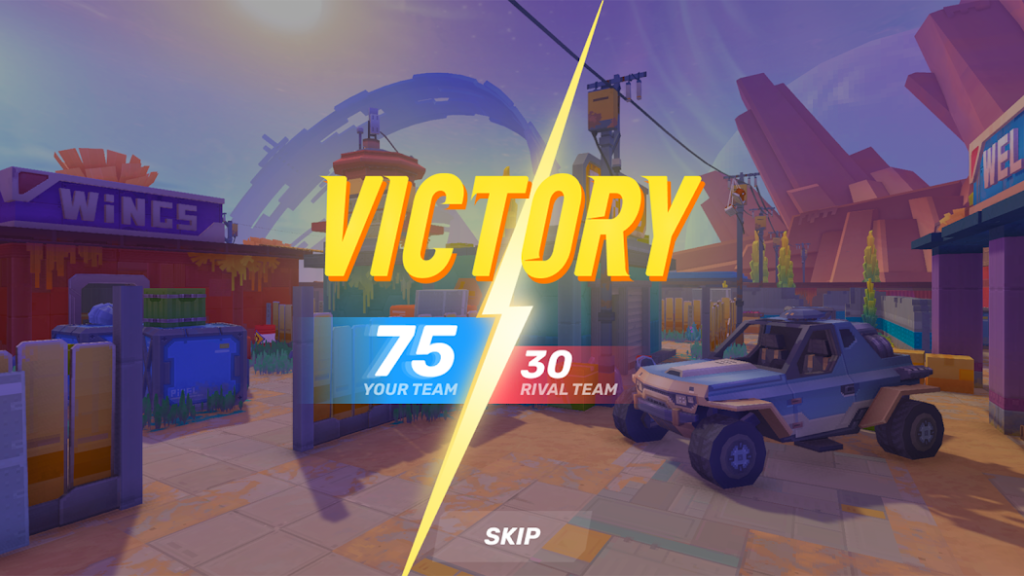
The game modes named in the available information are Deathmatch, Flag Capture, Duel, and Team Strike, along with the Singleplayer Mode. The names suggest a range of formats, from individual combat to team-oriented play, though this article does not describe their rules in detail because the supplied information does not either.
What can be said is that the modes and the changing maps work together. Whatever the format, the arena is not static, so each mode plays out against a battlefield that shifts as the match goes on. Map-specific details, such as names, layouts, or numbers, were not provided, and they are left out rather than guessed at.
The Pixelstorm and Future Updates
The Pixelstorm is the name attached to the game’s ongoing content. It is associated with new characters, new gear, new abilities, and seasonal content. These should be read as future updates rather than features already available, and the listing should be checked for what is currently live in the version you install.
The distinction matters because it separates what the game includes today from what it is expected to add. Version 0101.0 is the current version on Google Play as of the last update on September 15, 2026, and any Pixelstorm content beyond it would arrive through later versions.
Pixel Gun 2 Features
- Destructible maps and changing battlefields
- Character builds with weapons, gadgets, armor, and perks
- PvP battles and online co-op
- Cross-platform multiplayer and shared account progression
- Named game modes: Deathmatch, Flag Capture, Duel, and Team Strike
Conclusion
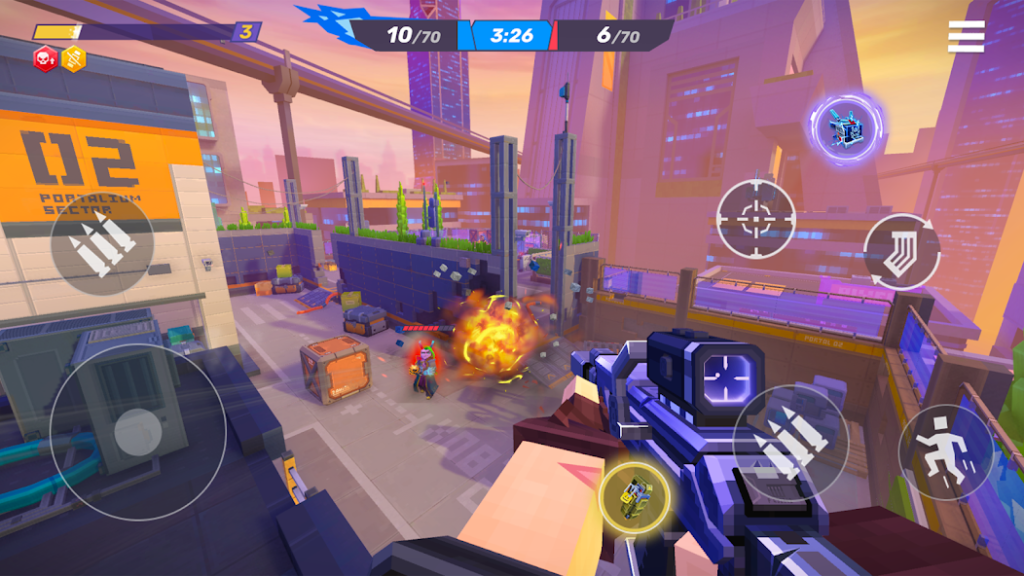
The documented features of Pixel Gun 2 fit together around a single idea: matches that change as they are played. Destructible maps reshape the battlefield, the build system covers weapons, gadgets, armor, passive perks, and combat abilities, and the PvP modes named so far include Deathmatch, Flag Capture, Duel, and Team Strike. Google Play lists version 0101.0, an Android 12 requirement, a 3+ content rating, and in-app purchases that include random items. The Pixelstorm points to new characters, gear, abilities, and seasonal content, all of which belong in the category of future updates.
More Android game coverage on GameVault: Last Isle Survival gameplay, Landman Oil Simulator gameplay, and American Farming 2 gameplay and map.
Frequently Asked Questions
Is Pixel Gun 2 coming out?
It is already out. Pixel Gun 2 was released on Google Play on September 2, 2026, and the current version, 0101.0, was updated on September 15, 2026. It requires Android 12 and up.
Is Pixel Gun 2 AI?
No. Pixel Gun 2 is a multiplayer first-person shooter, not an AI product. It does include a Singleplayer Mode with AI opponents, which lets you play against computer-controlled characters instead of other players.
Is Pixel Gun 2 related to Pixel Gun 3D?
Google Play lists Pixel Gun 3D as the publisher of Pixel Gun 2 under “Offered by.” The listing doesn’t say anything more about how the two games are connected.
Is Pixel Gun 2 good?
That depends on what you want from a shooter, so this guide sticks to what the game documents. It has destructible maps, character builds with weapons, gadgets, armor, and perks, PvP and online co-op, and cross-platform multiplayer with shared progression.
What's new
Data Safety on Google Play
The developer's Google Play listing includes a Data safety section describing what the app may collect and share. The listing notes that these practices can vary by app version, use, region, and age.
Data collected: user IDs, device or other IDs, purchase history, app interactions, and crash logs and diagnostics.
Data that may be shared with other companies or organizations: user IDs, device or other IDs, purchase history, app interactions, and crash logs, diagnostics, and other app performance data. The listing doesn't name the companies or organizations involved.
Security practices: data is encrypted in transit, and the developer provides a way to request that your data be deleted.
For full details, the listing points to the developer's privacy policy.
Add to "Frequently Asked Questions"
What data does Pixel Gun 2 collect?
According to the developer's Data safety information on Google Play, the app may collect user IDs, device or other IDs, purchase history, app interactions, and crash logs and diagnostics.
Does Pixel Gun 2 share my data?
The listing says some data may be shared with other companies or organizations, including user IDs, device or other IDs, purchase history, app interactions, and crash and performance data. See the privacy policy for specifics.
Can I request that my data be deleted?
Yes. The Data safety section states that the developer provides a way to request data deletion, and that data is encrypted in transit.
Images
Related apps




-
 Dr. Driving Game: 7 Exciting Features and Ultimate Driving Guide
- Cozy Cat Hotel 7 Adorable Features and Relaxing Idle Tycoon Guide
- Block Tech: 7 Exciting Features of the Ultimate Sandbox Car Builder
- Zomline Survival 7 Exciting Features and Zombie Strategy Guide
- Zombie Highway 2 Game: 7 Thrilling Features, Gameplay & Zombie Guide
- SimCity BuildIt: 7 Exciting Features, Gameplay & City-Building Guide
- Endless Racing Game: 7 Exciting Highway Racer Pro Features Gameplay
- Open World Racing Game: 15 Best Car Games to Explore
- Ragdoll Games: 15 Best Ragdoll Physics Games to Try
- Adventure Time Card Wars: 7 Exciting Features, Cards & Gameplay Guide


